Beginner's guide
Every international hub starts as a meadow. This guide walks you through the first hour – from mowing your first strip to planning the asphalt runway that opens phase 2.
1. Lay out a grass strip
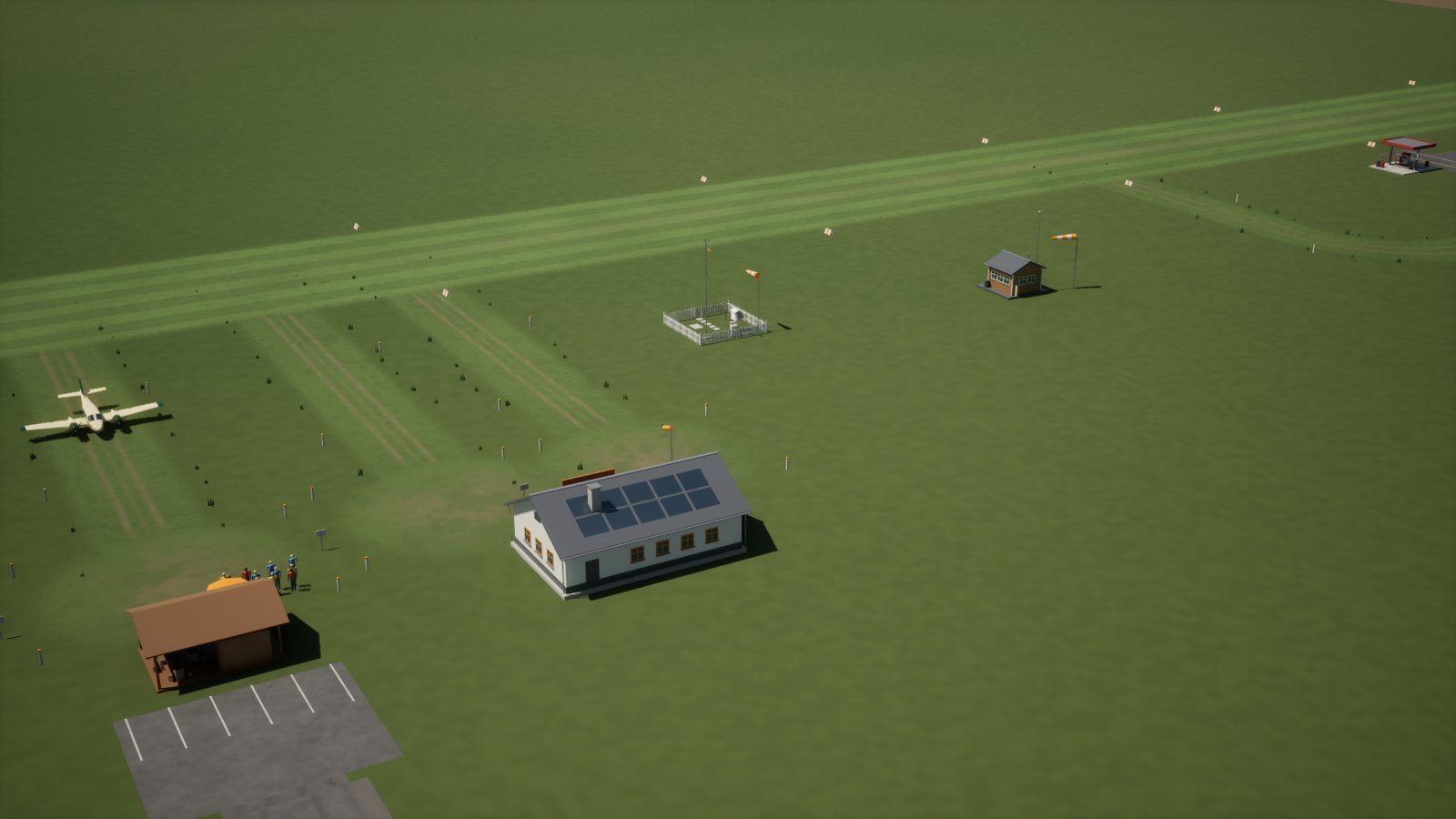
Pick a flat stretch of meadow away from trees and buildings – anything in the way is cleared automatically, but clearing costs money. Mow and stake out your runway. Grass is cheap and fine for light aircraft up to 5.7 tonnes. Think ahead: will a longer asphalt runway fit here later?
Then add a mown taxi path from the strip to where your stands will be.
2. Put up the radio hut
Without a radio hut nothing moves. It handles six movements per hour on one runway – every landing, take-off and low pass counts. Place it near the stands; visitors like to watch from its bench.
3. Add stands and welcome first visitors
Build a few grass stands next to the taxi path. After a while the first pilots call in by radio and ask to land. Accept them when you have a free stand – each landing earns a landing fee, parking money and a research point, and saying yes makes you popular. Ignoring calls or turning pilots away does the opposite.
Spectators arrive too. Later a restaurant, a visitor pavilion and a car park turn them into income.
4. Start research
Open the research tree and queue up the first cheap projects:
- Landing aids – fewer aborted approaches on grass,
- Box hangar – tenants who pay rent every day,
- Weather station – know when rain will close your strip,
- Flight school – circuits, fees and steady experience.
Only one project runs at a time; the rest wait in the queue. See research points.
5. Plan the asphalt runway
The big goal of phase 1 is the asphalt runway – 45 research points and some cash. It opens the door to the terminal, the control tower, turboprops and everything that follows. While you save up, check the goal board: chapters give you clear targets and pay out grants along the way.