
Radio hut
Every airport begins with a wooden hut, a radio and a pot of coffee. The radio hut handles all traffic on your first strip until a proper control tower takes over.
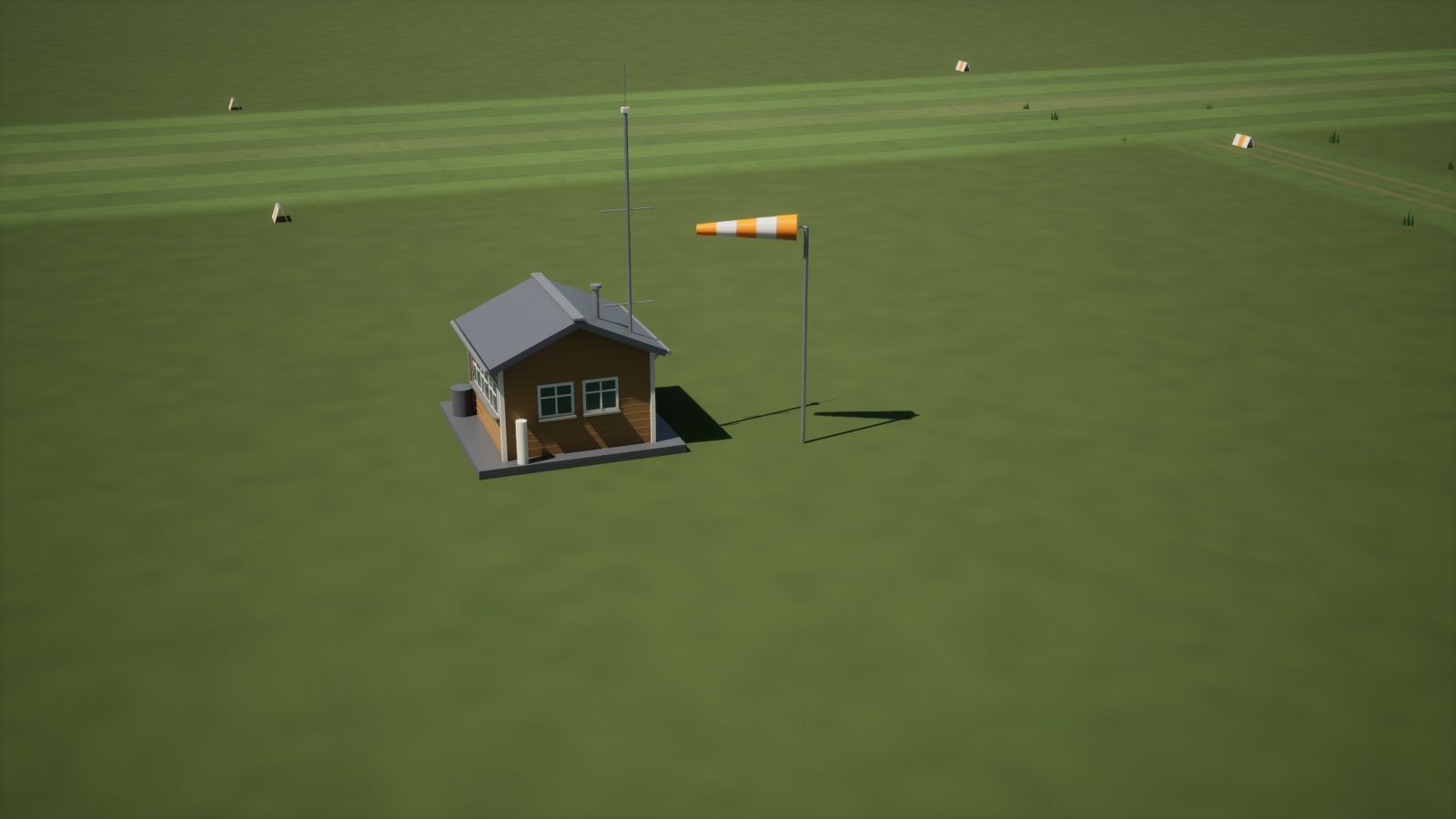
What it does
The radio hut is tower level 0. It is cheap, goes up in half an hour of game time and manages six movements per hour on one runway. Every landing, take-off and low pass counts against that limit. When the hour is full, arriving aircraft circle in the pattern and departures wait at their stand.
Without a radio hut nothing moves at all – it is the first building you place after laying out your strip.
Radio calls
Passing pilots call in and ask whether they may land. A request waits about ten minutes for your answer:
- Accept – the guest lands, pays a landing fee and your popularity rises a little.
- Reject – popularity drops slightly.
- Ignore – also costs popularity, and so does a guest you accepted who then finds no free stand and has to divert.
Check your free stands before you say yes.
Second radio operator
The research Second radio operator (Air traffic control, tier 1, after Landing aids) lets you extend the hut. With a second operator it handles ten movements per hour – usually enough for a busy grass field with hangar tenants, school circuits and sightseeing flights. When the control tower opens later, the second operator comes along as a controller.
Life at the hut
The hut is also the social centre of a small field: visitors watch from the bench and park their cars beside it, and pilots walk over after tying down their aircraft.