
Gates and boarding bridges
The gate is the last stop inside the terminal. Ground-floor gates send passengers across the apron on foot or by bus; gates on the departure level get boarding bridges that reach right up to the aircraft door.
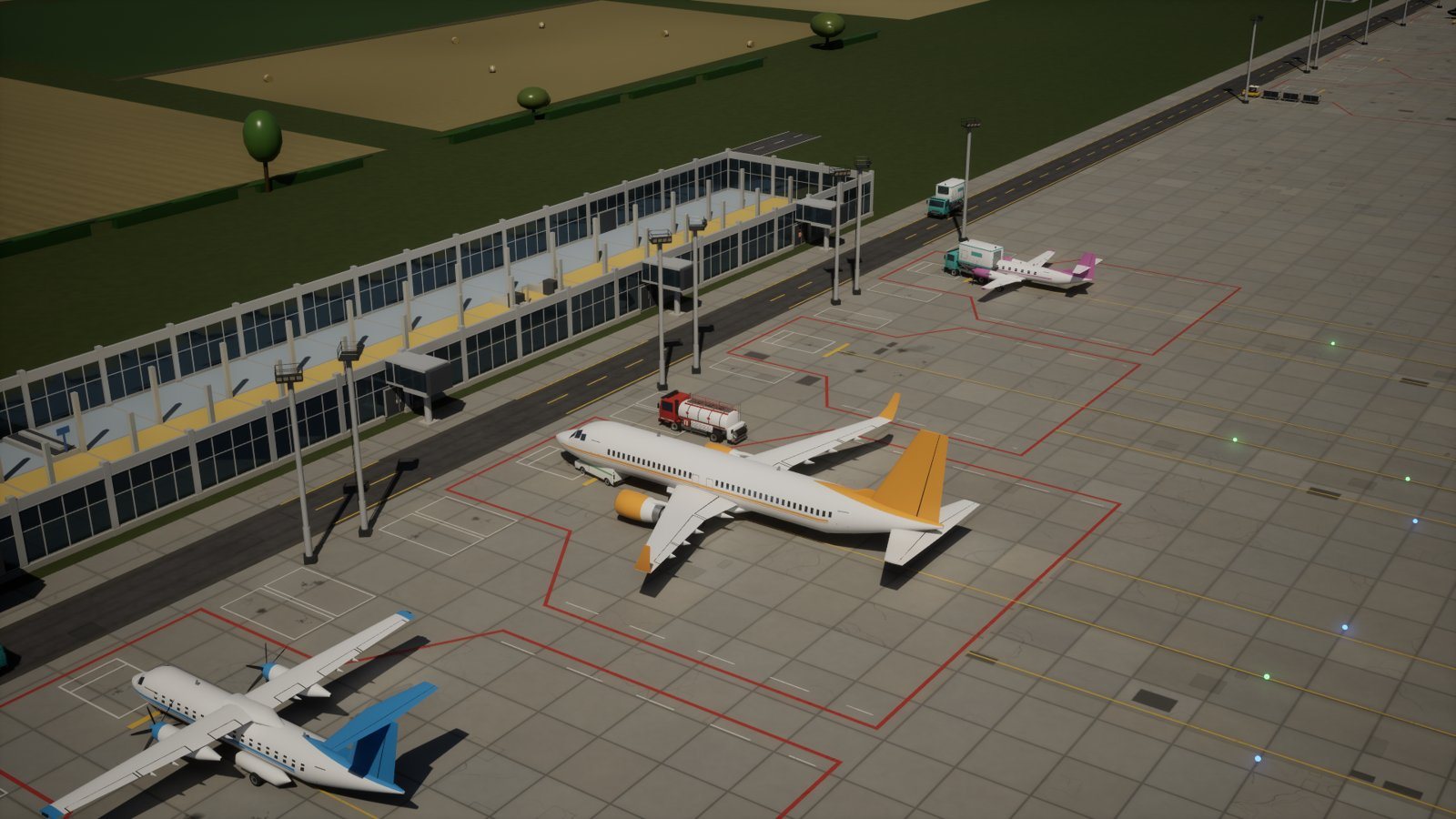
Gates
A gate must sit on the outer facade of the terminal, facing the apron. It costs 20,000 € to fit out and 160 € a day in staff. On the ground floor a gate is simply a door to the apron:
- if the stand is close, passengers walk – which costs a little satisfaction,
- if the stand is more than about 150 m away, they need a bus; when no bus turns up within a few minutes, they walk anyway.
Boarding bridges
Every gate on the departure level is a bridge gate. It costs an extra 60,000 € plus daily upkeep and is matched automatically with a nearby paved stand:
- the distance from the gate facade to the aircraft's front left door must be between 6 and 42 m,
- the shortest pairs are matched first, and each gate and stand is used once,
- grass stands and hangar boxes never get a bridge.
Passengers of a flight on a bridge stand always use that gate. They never need a bus or walk across the apron, and boarding over the bridge gives them a satisfaction bonus. When an aircraft is parked and boarding is not finished, the bridge cabin drives out to the door; afterwards it parks in front of the facade again.
Planning
Lay out bridge stands in a row along the departure-level facade, nose-in, with enough wingtip clearance between neighbours. Ground-floor gates remain useful for remote stands and smaller aircraft.