
Aprons and stands
Every visiting aircraft needs somewhere to park. Stands come in sizes from a patch of meadow to a widebody position, and the number of free stands limits how much traffic you can accept.
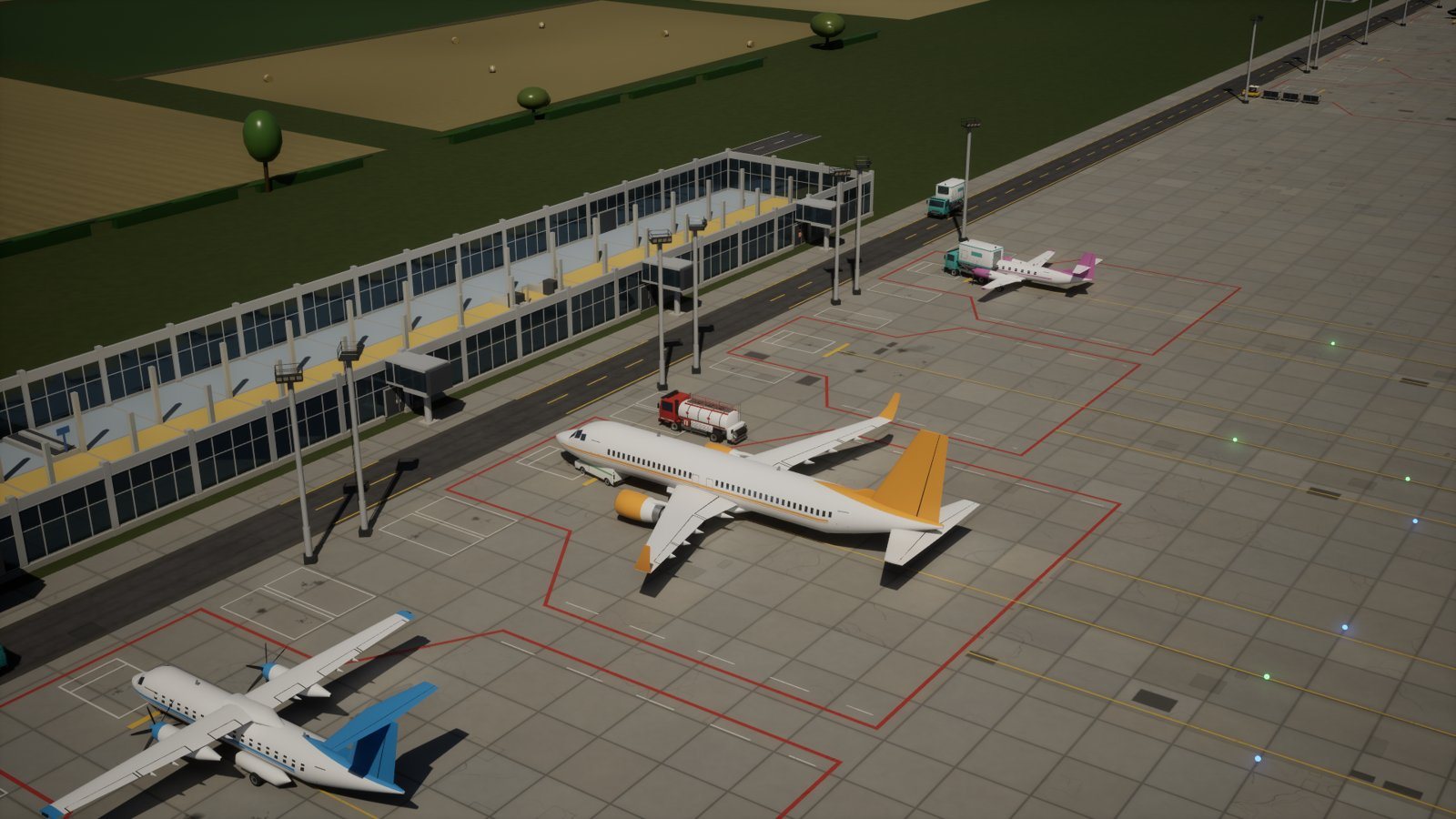
Stand types
| Stand | Cost | For |
|---|---|---|
| Grass stand | about 3,000 € | Light aircraft up to 5.7 t, no fixed orientation |
| Paved stand | about 6,000 € | Turboprops, business jets, regional aircraft |
| Class D | about 18,000 € | Narrowbody jets, wingspan up to 52 m |
| Class E | about 35,000 € | Widebodies, wingspan up to 65 m |
Class D and E positions arrive with the Medium-haul and Long-haul research. Apron surface between stands costs about 13 € per m² in asphalt; concrete is available later. Neighbouring stands need at least a few metres of clearance between the wingtips.
Stands earn money
Visiting aircraft pay a parking fee per started hour. Some general aviation guests arrive in the afternoon and stay overnight – they pay a flat overnight fee instead, but block the stand until the next morning. Plan a few spare stands for them.
Stands and traffic
A guest you accept by radio needs a free stand when it lands; if there is none, it has to divert, and that costs popularity. In the flight schedule every stand has its own row, so double bookings are easy to spot.
Stands near the terminal
Stands close to a bridge gate on the departure level get a boarding bridge. Remote stands are served by buses or passengers walk. Stands near a cargo shed are where mail and freight aircraft park.
Ground vehicles – fuel trucks, tugs, baggage tractors – stop beside the aircraft and drive around it to their positions, so leave some room around each stand.