Taxiways
Taxiways are the roads of the airfield. Every stand, hangar and runway end must be reachable – and a well-planned network keeps aircraft from blocking each other.
Surfaces
| Surface | Cost | Default width | Notes |
|---|---|---|---|
| Grass path | about 4 € per m² | 10 m | Light aircraft up to 5.7 t only |
| Asphalt | about 16 € per m² | 15 m | Research Asphalt taxiways and apron |
| Concrete | about 26 € per m² | 15 m | Phase 4, durable, less maintenance |
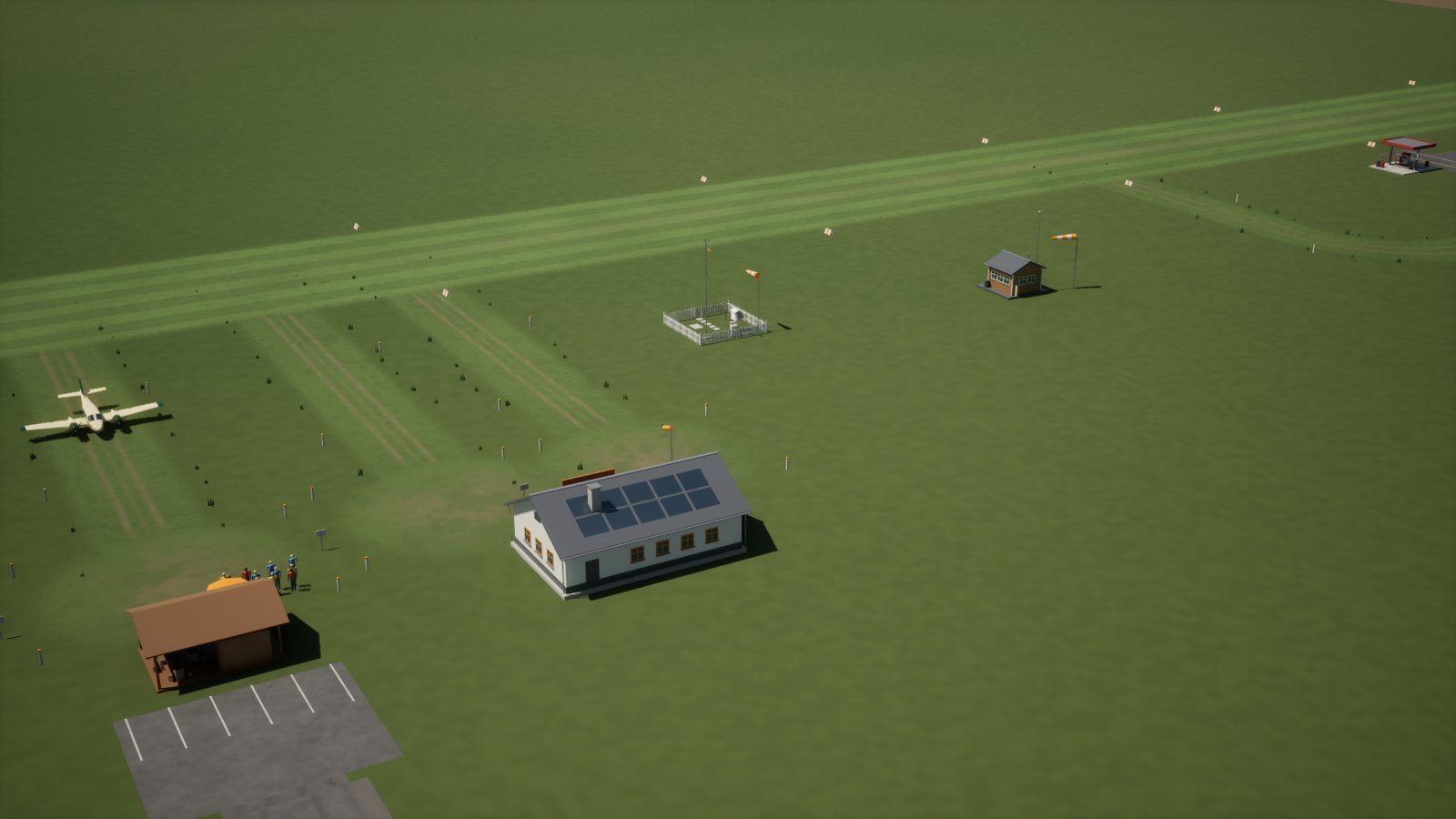
On the grass field you stake out mown paths with flags along the edges. Once the asphalt runway is in, the research Asphalt taxiways and apron brings paved taxiways and apron surfaces with markings – needed for anything heavier than a light aircraft.
Routing
Aircraft find their own way along the network. Route finding avoids surfaces that are too weak for an aircraft, and the flight schedule check warns you when an aircraft type has no reachable path to its stand. Typical causes:
- a grass path between a paved runway and a paved stand,
- a missing link to one runway end,
- a stand that is not connected to the network at all.
Avoiding jams
A single taxiway used in both directions works on a quiet field, but becomes a bottleneck once traffic grows. Good habits:
- build exits from the runway so landing aircraft clear it quickly,
- add a parallel taxiway alongside the runway,
- give the apron more than one connection to the taxiway system.
At night
Without taxiway lighting, aircraft taxi noticeably slower in the dark. The research Taxiway lighting (after Runway lighting) removes that penalty – see night operations.