Buses and baggage carts
Two vehicles keep people and luggage moving across the apron. Buses carry passengers to remote stands, and baggage tractors pull carts of suitcases, mail and freight between aircraft and buildings.
Baggage tractors
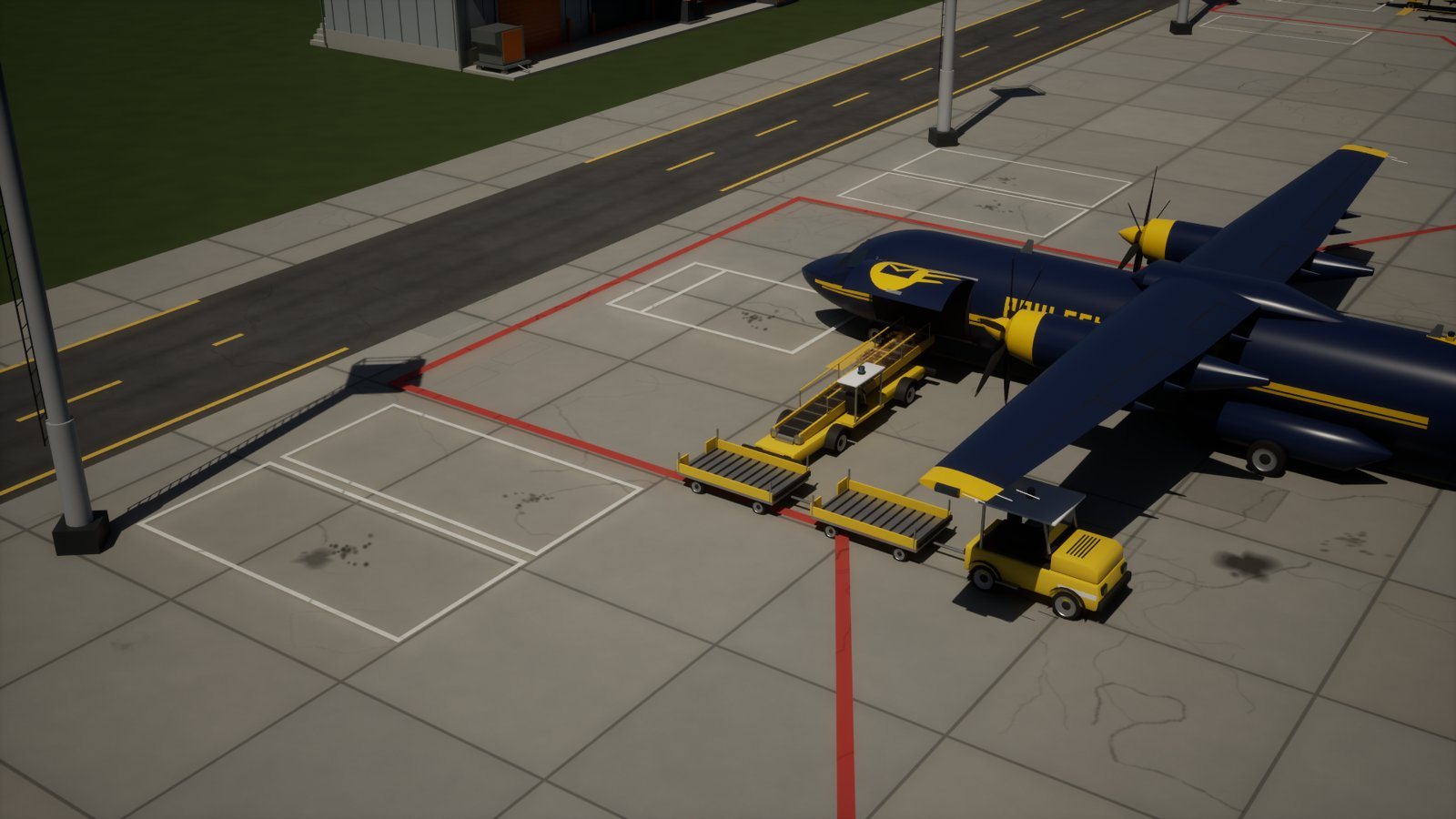
Baggage tractors with carts arrive with the research Vehicle hall. They are the workhorses of the apron:
- Departures: the tractor waits at the make-up station of the baggage system until the bags of a flight are ready, then drives them out to the aircraft.
- Arrivals: it unloads the aircraft and brings the bags to the unloading station.
- Cargo: with at least one tractor in your fleet, cargo sheds handle freight and mail twice as fast as by hand.
A tractor costs 30,000 € and 90 € a day to run.
Apron buses
Buses come with Pushback and buses, one step further along the Ground handling branch. A bus is needed when the walk from the gate to the stand is longer than about 150 m. If no bus is free within about five minutes, passengers walk anyway – which costs satisfaction, just like any walk across the apron.
A bus costs 100,000 € and 180 € a day to run. Passengers boarding over a boarding bridge never need a bus.
Getting the numbers right
- One tractor per busy stand group is a good start; add more when make-up stations fill up and bags are left behind.
- Buses are only worth it if you really have remote stands. Moving stands closer to the terminal, or adding bridge gates, often saves the bus entirely.
Other ground vehicles
Later in the tree, Catering and cleaning adds catering trucks and cleaning vans for larger aircraft, together with a second Ground operations post in your airport management.