Pushback tugs
Small aircraft simply turn and taxi away. Anything with 40 seats or more parks nose-in and needs a pushback tug to get back onto the taxiway.
Who needs a pushback
Every aircraft with 40 seats or more – from the Tern T48 regional turboprop upwards – needs a pushback before departure. With your own tug the pushback takes about four minutes: the tug couples up, pushes the aircraft back onto the taxiway and drives back to wait for the next job.
Smaller aircraft such as the Kestrel K19 or the Swift S9 do not need one.
Unlocking
Pushback tugs and apron buses share the research Pushback and buses in the Ground handling branch. It requires the Vehicle hall, which itself needs service roads and the terminal. The vehicle hall is also where your ground fleet lives.
Costs
- Purchase: 70,000 €.
- Running costs: 120 € per day.
How many tugs?
One tug can handle a departure every few minutes, so a single tug serves a small regional airport well. Add more when departures bunch up – for example a morning wave where several regional jets leave within a quarter of an hour. A delayed pushback holds up the stand, the next arrival and the whole flight schedule.
On the apron
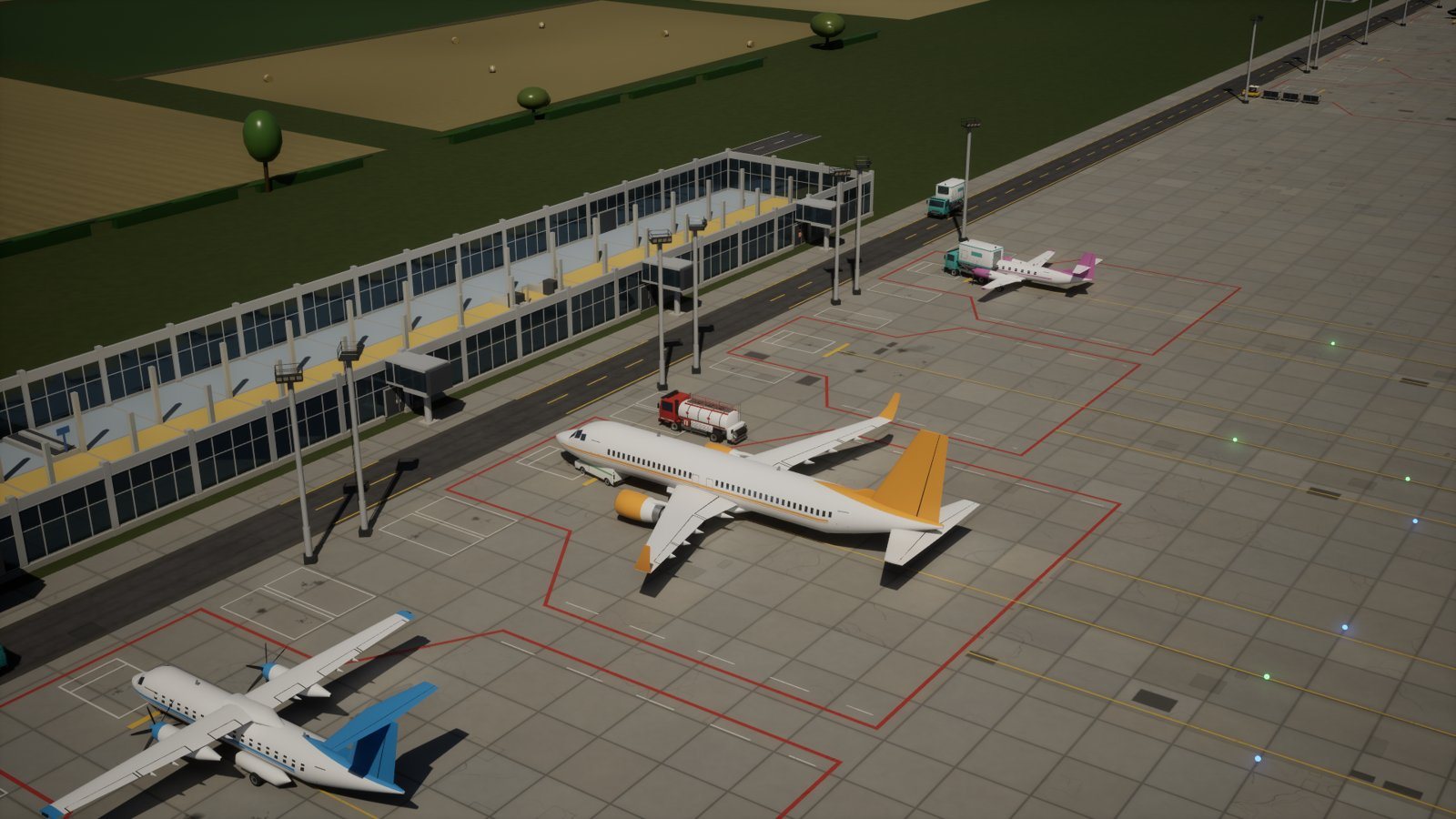
Tugs drive around the aircraft to the nose, so stands need some room in front of them. Ground vehicles never park inside the aircraft outline – they stop beside it and manoeuvre around the outside to their position.